

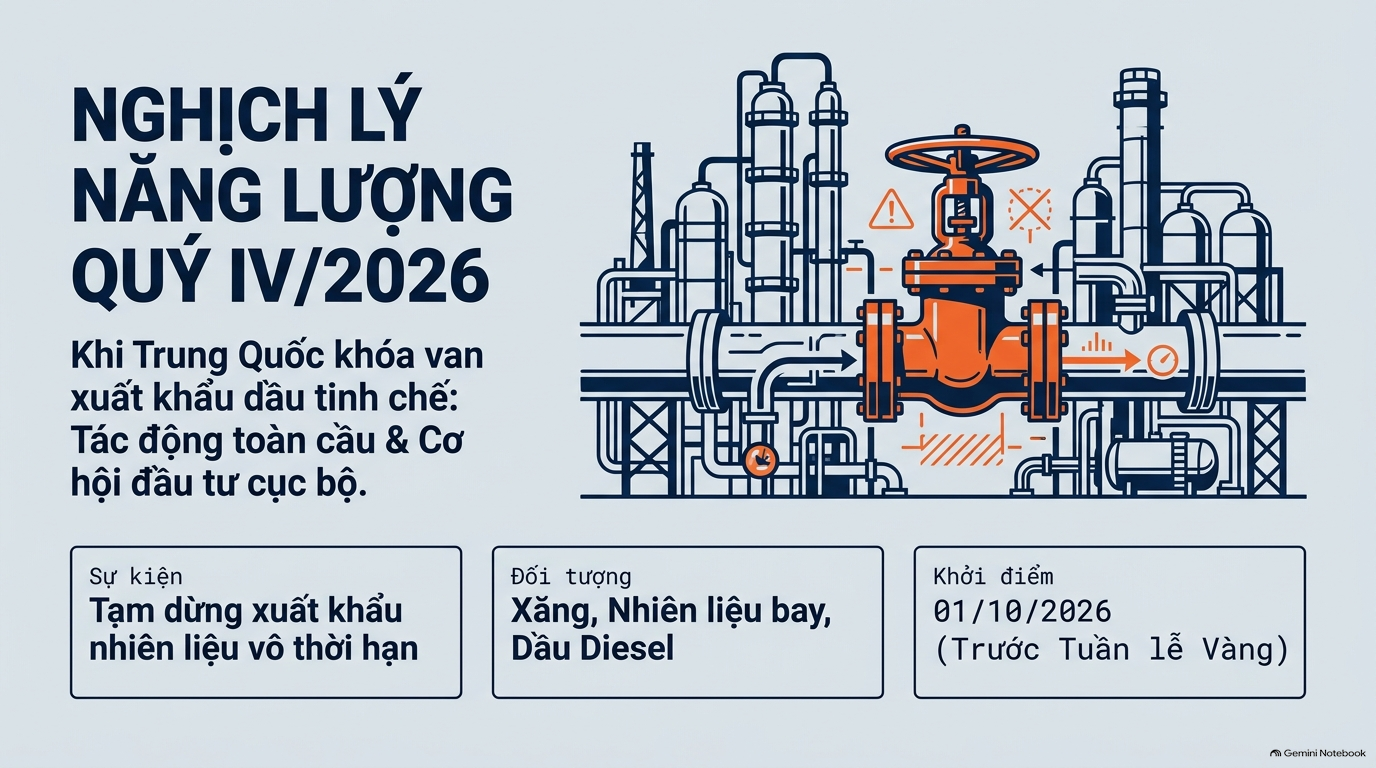
” Price momentum surged following reports that Chinese oil refineries (including PetroChina) have simultaneously suspended exports of refined oil products (gasoline, jet fuel, diesel) outside the Hong Kong and Macau regions until further notice from Beijing, in order to prioritize energy security and domestic supply. ”
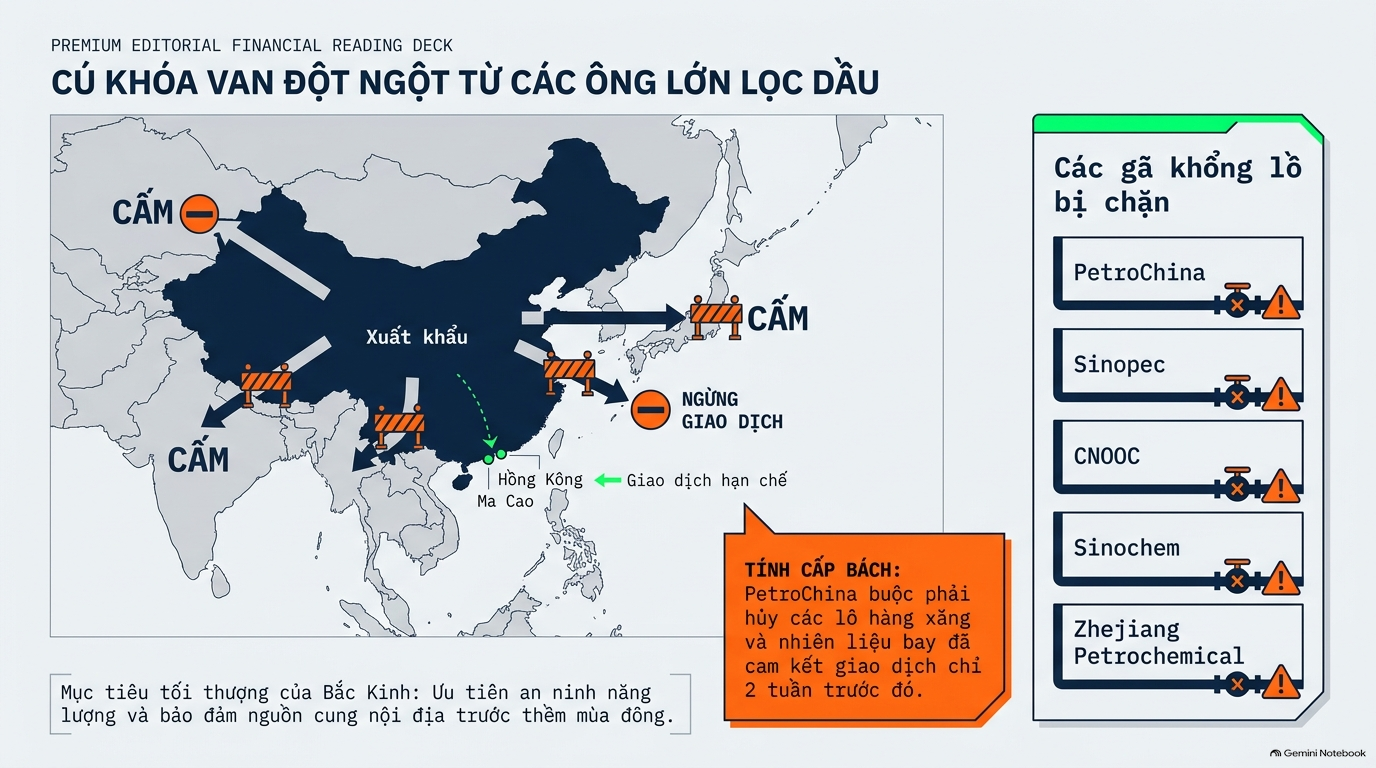
The news from Bloomberg and Reuters is noteworthy because this is not the first time China has taken such action this year. In March 2026, when the Iran conflict disrupted crude oil flows from the Middle East, Beijing had previously asked major refineries — PetroChina, Sinopec, CNOOC, Sinochem, and Zhejiang Petrochemical — to halt exports of gasoline and diesel outside the Hong Kong and Macau regions. By July, the restrictions were gradually eased. However, on October 1st, the same scenario repeated: four Reuters sources confirmed that Chinese refineries have not yet received the “green light” to export fuel in October, and PetroChina has canceled several batches of gasoline and jet fuel that had been committed for delivery just two weeks prior.
What makes this round of developments more noteworthy is that it occurs even as crude oil flows through the Strait of Hormuz have partially recovered. In other words, the world no longer faces severe crude oil shortages as before, but still faces shortages of finished gasoline, diesel, and jet fuel products — because crude oil must undergo refining before it can be used, and both China’s and Russia’s major refineries are simultaneously restricting product exports. This is precisely the mechanism that helped expand global oil refining margins (crack spread) abnormally during Q2 2026 — a period when Binh Son Refining and Petrochemical Company (BSR) recorded after-tax profit in the first half of 15,727 billion VND, exceeding the full-year plan by more than 7 times in just six months, as Easy Stock previously analyzed.
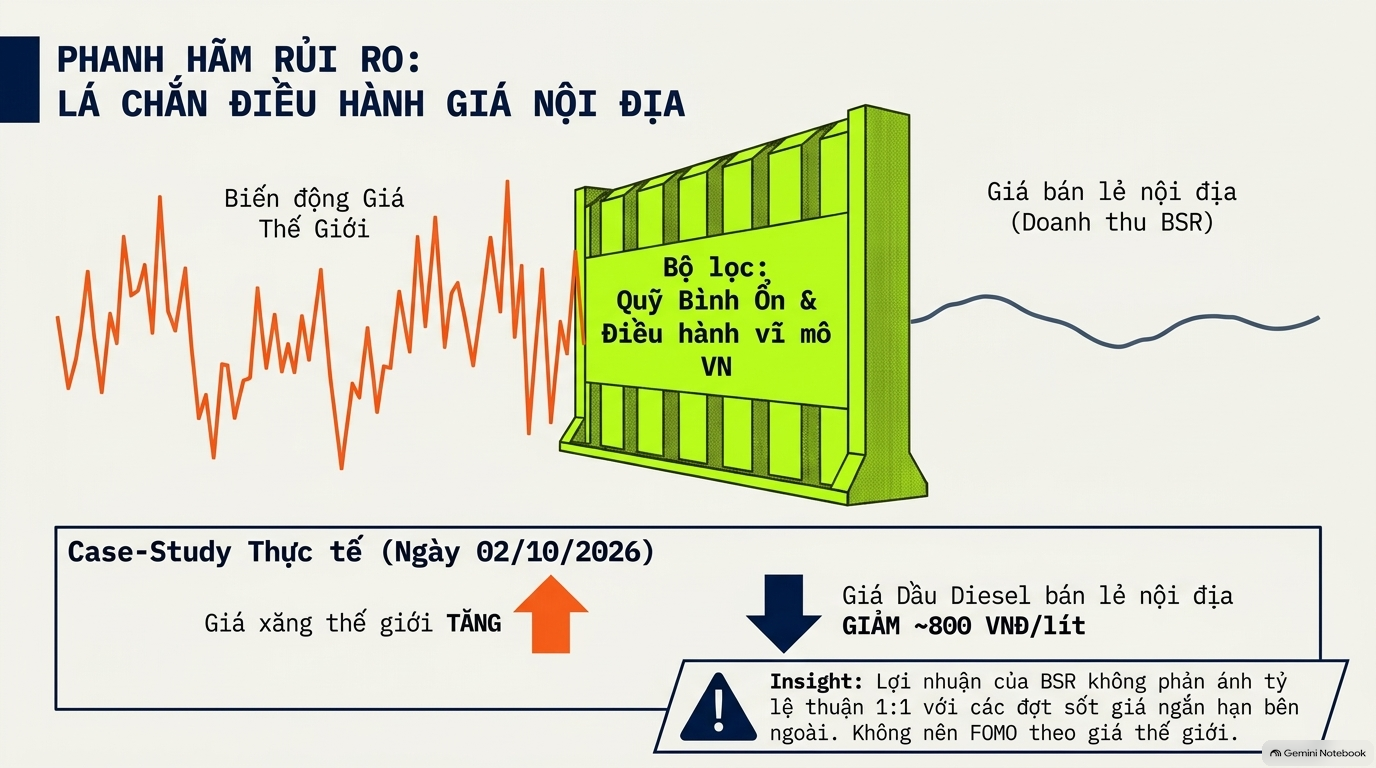
If this second round of China’s export restrictions extends through the National Day holiday period (October 1-7) and is not immediately resumed thereafter, Asian regional fuel supply will remain tight — a scenario favorable for the profit margins of the Dung Quat refinery in Q4, precisely the period during which BSR itself previously warned this was a “highly cyclical” factor that is difficult to forecast. The risk here lies in the fact that Beijing itself is uncertain how long it will maintain the restrictions — according to Reuters, the decision on whether to resume exports after October 7th will depend on China’s domestic inventory levels and production capacity of its own refineries, rather than a fixed long-term policy. In fact, the domestic retail price movements in Vietnam on October 2nd also show a picture that is not entirely one-directional: while gasoline prices were adjusted upward following global trends, domestic retail diesel prices actually fell by nearly 800 VND/liter compared to the previous day — a signal reminding us that Vietnam’s price management mechanism and price stabilization fund can still slow down or deflect the transmission of international price fluctuations to the domestic market, so investors should not assume that every external price surge will be immediately and fully reflected in BSR’s business results.
Two things worth monitoring in the coming days: first, whether China will resume exports immediately after October 7th as it did in July, or will maintain the restrictions as an energy security priority policy throughout the winter — because only if restrictions persist will they create a meaningful impact on the crack spread that BSR can benefit from in Q4. Second, Russia is also experiencing disruptions at several refineries and is restricting fuel exports itself — if both major supply sources (China and Russia) contract simultaneously while winter demand in the Northern Hemisphere rises, this could be a far more powerful catalyst than a typical short-term price fluctuation.
This article is compiled from publicly available sources and independent financial analysis. Content is for informational reference only and does not constitute investment recommendations under the Securities Law 2019. Investors bear full responsibility for their own financial decisions. Easy Stock — easystock.vn