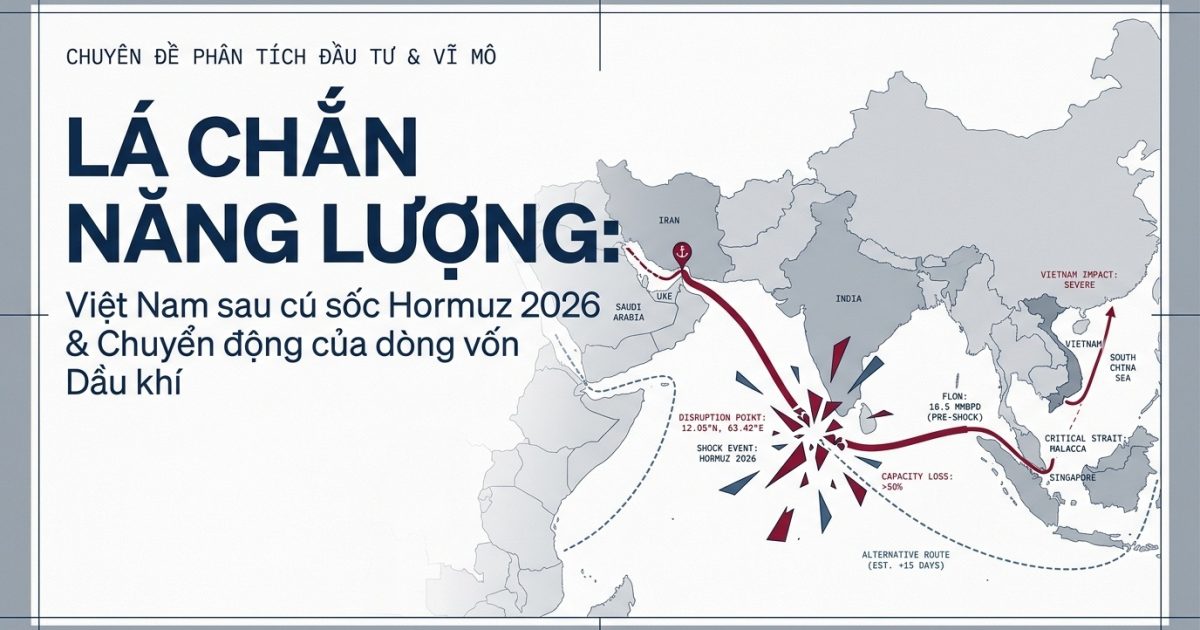


What is BSR’s Economic Moat?
Why does BSR have a 31% ROE yet many investors still find it cheap? Read the analysis below to understand better!
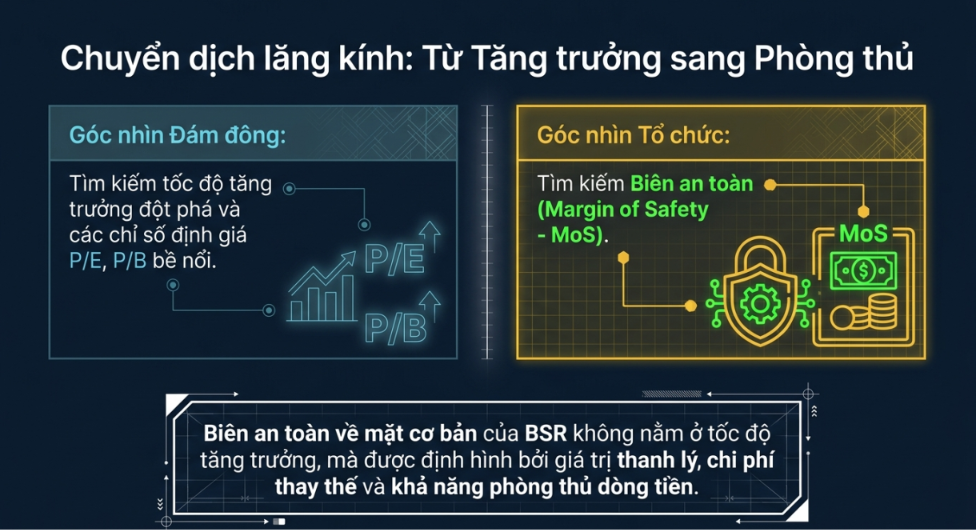
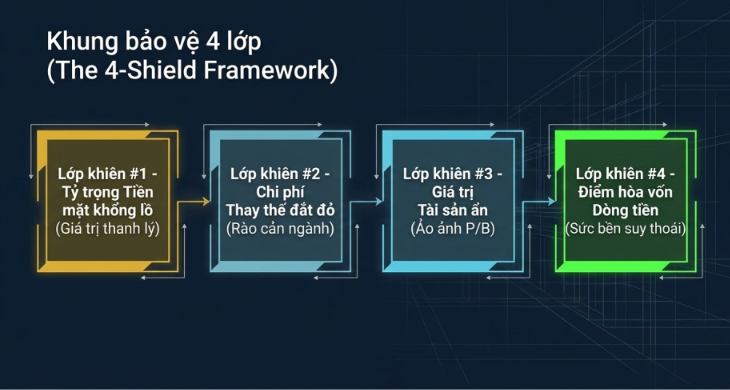
BSR’s Margin of Safety (MoS) fundamentally does not rely on breakthrough growth rates, but is shaped by liquidation value (net assets), replacement cost, and cash flow defensive capability. For institutional cash flows, BSR possesses 4 extremely solid valuation protection layers:
1. High Cash per Share Ratio
- BSR continuously increases its cash reserves; Q2/2026 report shows the company holds nearly 53,800 billion VND in deposits.
- With current outstanding shares reaching over 5 billion (following the 30% stock dividend distribution), the cash per share (Cash per Share) is approximately 10,700 VND.
- This means when you buy BSR at the current market price (around 30,600 VND), about 35% of your investment is already “secured” entirely by cash deposits in banks, bearing no risk from core business operations
2. Attractive Valuation Compared to Replacement Cost
- BSR’s market capitalization has risen to approximately 150,000 – 153,000 billion VND (equivalent to about 6 billion USD)
- Although market cap has increased significantly, to license, design, and construct a brand new crude oil refinery with 148,000 barrels per day capacity, coastal location, and a complete logistics system like Dung Quat at the present time, the investment cost (CAPEX) is estimated to reach 7 – 10 billion USD (comparable to the Nghi Son project scale). Buying BSR today still means acquiring a monopoly-like business at less than the cost of new construction.
3. P/B Ratio Reflects Peak Earnings Cycle
- BSR currently trades at a P/B (Price-to-Book) valuation around 1.7x – 2.0x. Although this figure is higher than the previous 1.2x level, it does not yet fully reflect the true asset value.
- The Dung Quat refinery has been operating since 2009, with most fixed assets nearly fully depreciated. In financial statements, the book value of these assets is recorded significantly lower than the real value of a money-printing machine operating at record efficiency (regularly exceeding 110% – 124% capacity). If assets were revalued at market prices, BSR’s P/B ratio would be even cheaper
4. Lowest Cash Flow Breakeven Point in the Industry
A company’s Margin of Safety becomes most apparent when the industry enters a downturn cycle (Crack Spread declines sharply).
- Thanks to the absence of long-term debt (no interest expense pressure) and low operating costs (major items already fully depreciated), BSR’s Crack Spread breakeven point hovers around just 2 – 3 USD per barrel.
- Meanwhile, newly constructed refineries burdened with billion-dollar debt would need a Crack Spread of 7 – 9 USD per barrel to avoid negative cash flow. This protection layer ensures that even in the worst global oil price scenario, BSR maintains positive operating cash flow (CFO).
What do you think about BSR? Let’s discuss with Tuyen!
For the complete article on how BSR has grown recently, check here !
Wishing all investors good health and success!
Best regards,
Luong Dang Bich Tuyen (Ms)
M: (84) 78 480 9235
E: luongtuyen.271298@gmail.com
Disclaimer: All information and opinions in this article are for reference purposes only and represent the personal views of the author, and are absolutely not investment advice or recommendations. Readers must assess risks themselves and bear full responsibility for all their trading decisions.